
The digital clock on the dashboard of my Subaru shifted from 3:58 to 3:59 as I sat at the curb of Cambridge Drive. Snow had begun falling over Monroeville around noon, a heavy, wet Pennsylvania flurry that coated the manicured lawns and clung to the red bow my mother tied every winter to the front lamppost. Through the frosted windshield, I watched the house.
It was a split-level brick home that my grandfather had built in the late fifties and my parents had lived in since 1984. Every shutter was painted hunter green. Every holiday, without exception, it had projected an unshakeable, salt-of-the-earth stability. My mother, Helen, had spent forty years curating that image across church bake sales, dental office reception desks, and Christmas newsletters sent to seventy households across Allegheny County.
In my passenger seat rested two items: my black leather messenger bag containing nine years of bank statements, and the small, heavy cardboard box containing the Mitutoyo digital calipers I had bought for my father.
*Eat in the kitchen,* my father, Arthur, had whispered into the telephone twenty-four hours earlier. *Don’t upset your mother. This will blow over.*
I turned the key, killing the engine. The quiet of the car was instantaneous, filled only by the ticking of the cooling manifold.
I took a slow breath, feeling the cold air settle deep in my ribs. For eight years and nine months, my life had run on a precise, unalterable schedule: the twenty-sixth of every month, an automated debit of $1,200 moved from my checking account at First Commonwealth Bank into my father’s private checking account at Dollar Bank. One hundred and eleven thousand, six hundred dollars. It was more than I had put toward my own retirement. It was twenty thousand dollars more than my remaining student loan balance when Neil and I had separated. It was the quiet, invisible scaffolding holding up the roof of the house before me.
And yet, thirty feet away, behind the bay window glowing with soft amber incandescent bulbs, sixteen people were sitting down to honey-glazed ham and buttered rolls, while my place card had been dropped into the trash can beside my father’s drill press.
I picked up the gift box and the messenger bag, stepped out into the biting wind, and shut the door.
The front steps had not been salted, only shoveled in a narrow, hurried strip. When I opened the front door, the warm blast of roasting pork, clove, and pine struck me like a physical barrier. Laughter rolled from the dining room—Uncle Ray’s booming baritone, followed by Aunt Carol’s high-pitched titter.
"I'm telling you, Arthur," Ray was saying, his voice carrying clearly over the soft clink of stainless steel against porcelain, "a small business in this economy is pure guts. But Travis has always had your spine. Takes after his old man."
"Well, he works with his hands," my mother’s voice rang out, silky and triumphant. "There's no substitute for honest sweat. Pass the potatoes to Brooke, Travis. She’s eating for two now, even if she won’t admit it yet!"
A chorus of teasing groans rose from the table.
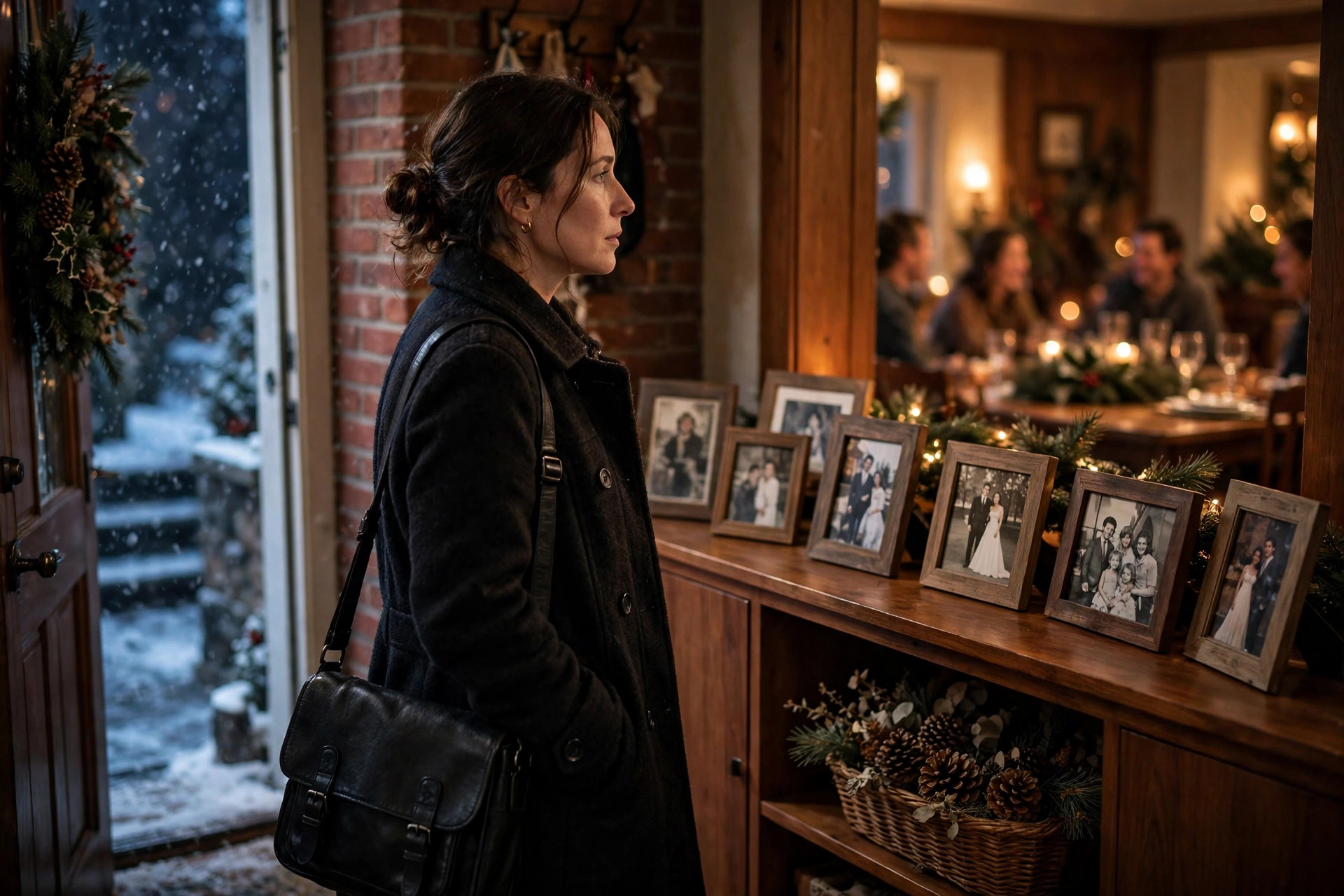
I stood in the entryway, shedding my boots onto the rubber mat. Nobody had come to greet me. Nobody had called out from the living room. On the credenza by the coat rack, the framed photographs were lined up in chronological order: Travis’s high school baseball championship, Travis’s wedding to Brooke three summers ago, my parents’ thirty-fifth anniversary in Cape May. My own college graduation portrait from Pitt, which had occupied the corner space for a decade, had been shifted down to the bottom shelf beneath a basket of decorative pinecones.
I walked down the short hallway into the kitchen.
The room was immaculate, save for the staging area near the sink. On the granite island—installed three years ago during a kitchen remodel my father had claimed was paid for by "machinery consulting"—sat a lone plate.
It was an everyday stoneware dish, mismatched against the festive Noritake china being used twenty feet away. Upon it rested two slices of dry ham, a spoonful of lukewarm scalloped potatoes, and a single dinner roll with no butter. Beside it, someone had placed an eight-ounce glass of tap water.
No fork. No napkin.
"You're late," my father said from the doorway.
He had slipped into the kitchen so quietly I hadn't heard his crepe-soled loafers on the linoleum. Arthur Step was sixty-six, thick-shouldered and gray-haired, with grease permanently etched into the calluses around his thumbnail beds. He was wearing the burgundy lambswool cardigan I had bought him two Christmases ago. His eyes flickered down to my messenger bag, then to the small gift box in my hands, before darting nervously toward the dining room archway.
"It’s four-fifteen, Dad," I said. My voice was level, almost conversational. "Traffic on the Parkway was slow."
"Your mother wanted everyone seated by three-forty-five," he whispered, stepping closer, his hands tucked deep into his pockets. "Just sit here, Mary. Eat your plate. I’ll bring you some pie later. When Ray and Carol leave for the six o’clock mass, you and I can go out to the garage and look at the new torque wrench Travis brought over."
I looked at him. Really looked at him.
I looked at the silver stubble along his jawline, the faint tremor in his right hand that he tried to hide by balling his fists in his cardigan pockets, and the nervous, calculating slant of his mouth. This was the man who had wept onto a paper napkin in a Panera Bread eight years ago, begging me to preserve his dignity, swearing that within six months he would be back on his feet and repay every cent.
"Did you tell her?" I asked.
"What?" he murmured, glancing over his shoulder.
"Did you tell Mom that I've paid twelve hundred dollars every month since March 2018?"
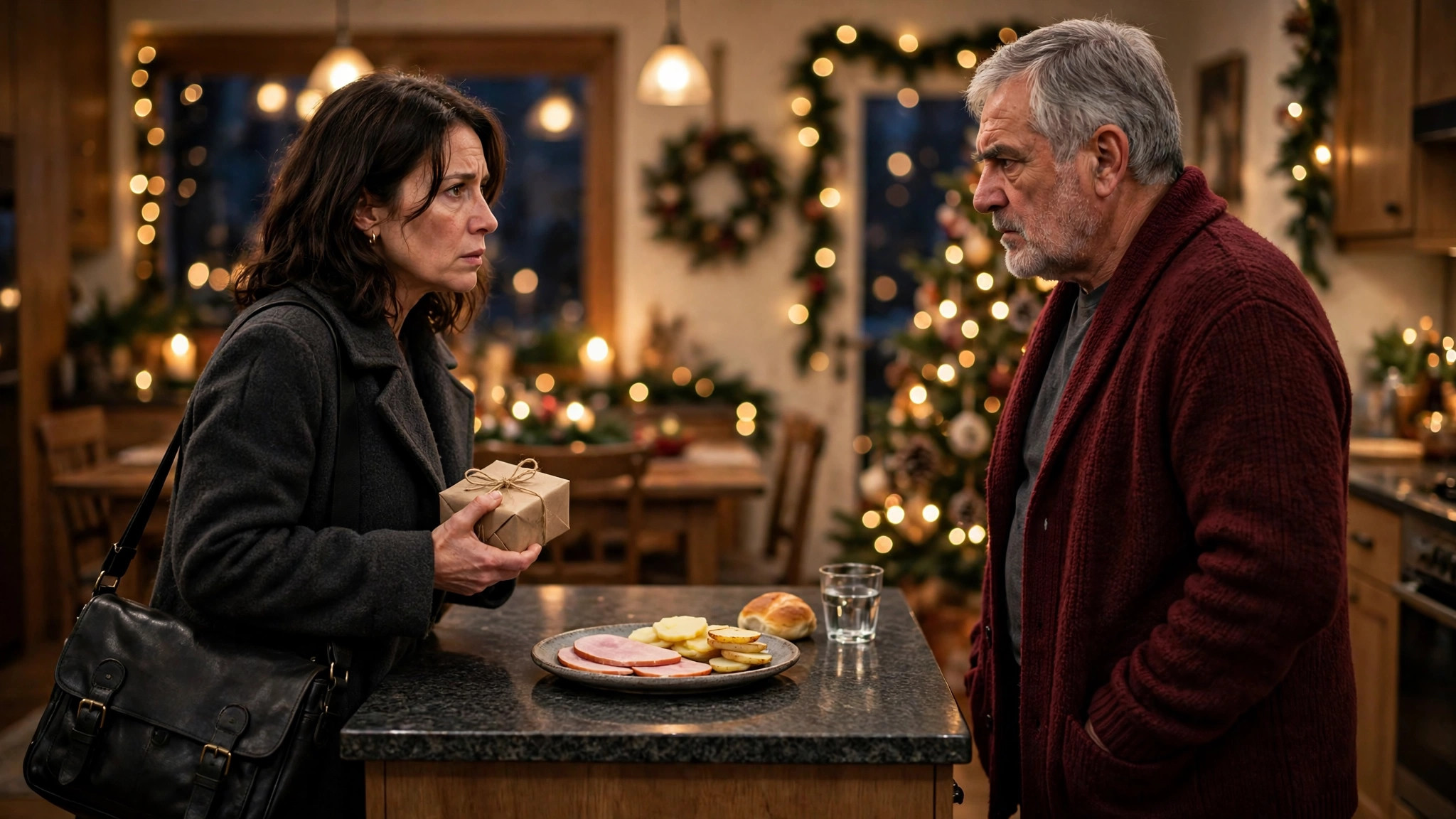
Arthur's face flushed a dark, mottled crimson. "Keep your voice down. We had an agreement, Mary. A sacred agreement between father and daughter. You gave your word."
"My word was given to help you keep this house while you looked for work," I said, my voice steady, carrying an edge of clarity that made him flinch. "Not so you could fund Travis’s business while Mom tells the entire family I’m an ungrateful parasite who abandoned you."
"Travis is family!" Arthur hissed, leaning forward, his breath smelling of cloves and rye whiskey. "He’s trying to build something! He’s young, he’s got a wife, he’s got a shop that’s going to carry this family’s name long after I’m in the dirt. You work in an office. You have a corporate salary, no kids, no husband anymore—what are you saving it for? You're being selfish, Mary. Just like Neil said you were."
The mention of Neil struck like a cold blade, but instead of piercing me, it crystallized something that had been thawing for weeks.
"Neil left," I said softly, "because he knew I was keeping a secret for you that was poisoning my own marriage. He asked me where sixty thousand dollars went during our refinance, and I lied to him to protect you. And you stood in the garage yesterday and told Travis to *let her feel what she’s worth.*"
Arthur’s mouth opened slightly. The color drained from his cheeks. "You... you were in the driveway?"
"I was by the water heater," I said. "Holding Mom’s scarf."
Before he could respond, the kitchen door swung wide. My mother entered, carrying an empty gravy boat. She wore a hunter-green velvet dress, her silver-streaked hair swept back into an elegant chignon. When she saw me standing by the island, her face instantly hardened into a tight, practiced mask of domestic disappointment.
"Oh," Helen said, setting the ceramic boat into the sink with a sharp clatter. "You decided to show up. I told your father you probably wouldn't bother, seeing as you couldn't be bothered to help your brother keep his business off the ground."
She didn't look at my eyes; she looked at my coat, which was still buttoned.
"Your food is on the island," she continued, wiping her hands on a linen towel. "If it's cold, use the microwave. We're getting ready to take the Christmas photograph out front by Travis's car in ten minutes. Don't linger in the foyer when we go out. Ray has his camera on a tripod, and we don't want anyone in the background."
I didn't move toward the plate. I picked up the small wrapped box containing the calipers and placed it gently next to the gravy boat.
"Merry Christmas, Dad," I said.
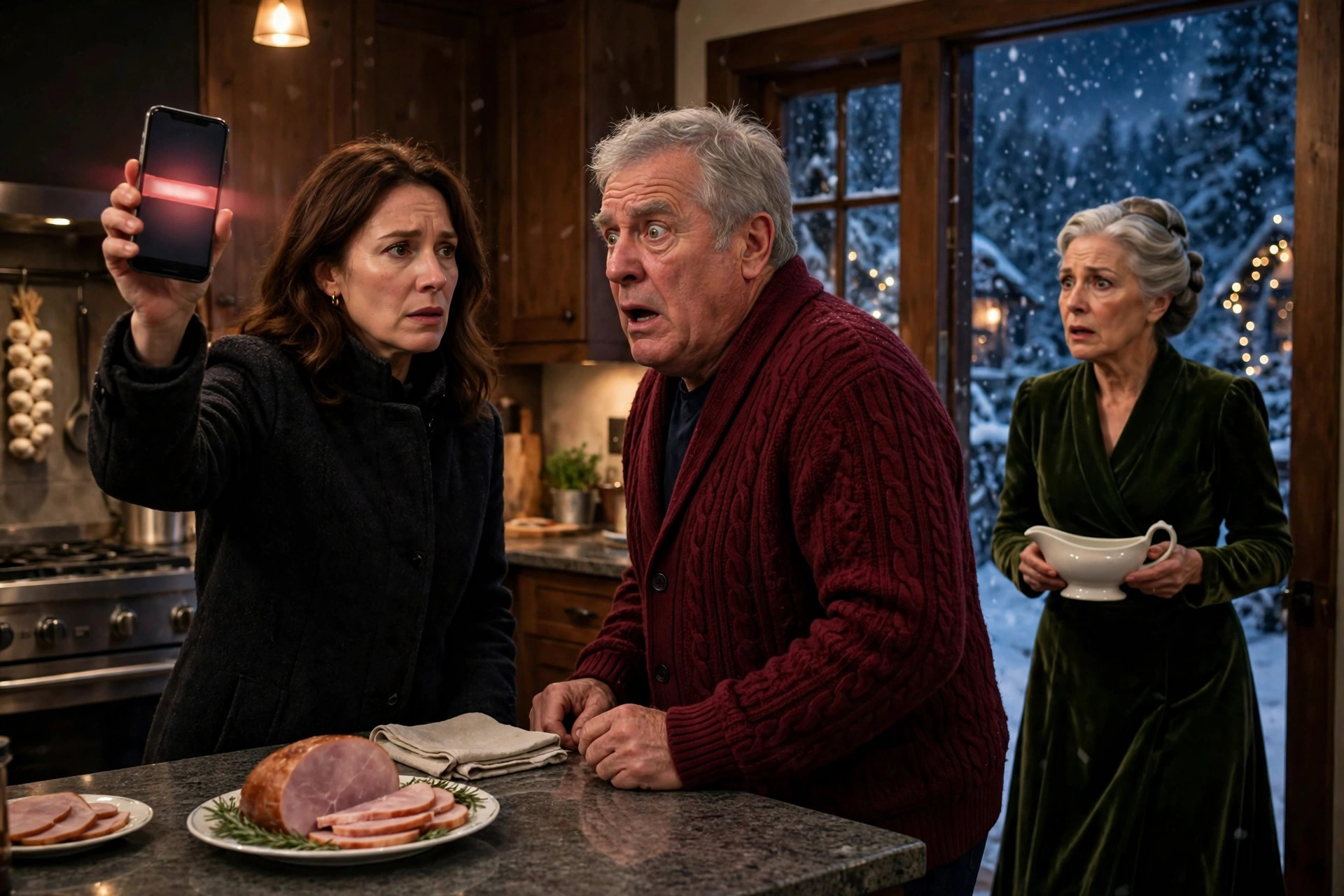
Then I reached into my coat pocket, pulled out my smartphone, opened the First Commonwealth banking app, and held the screen in front of Arthur’s eyes.
On the screen was the scheduled recurring transfer: *To: Arthur Step - Dollar Bank Checking. Amount: $1,200.00. Date: Dec 26, 2026. Status: Active.*
With a single tap of my thumb, I hit *Cancel Recurring Transfer.*
A red confirmation banner flashed across the top of the glass: *Transfer series successfully canceled.*
Arthur stared at the screen, his chest heaving as if he had just been struck with a lead pipe. His eyes snapped up to mine, filled with a sudden, suffocating panic.
"Mary," he choked out, his voice barely audible. "Mary, don't do that. The shop’s insurance premium is due on Friday."
Helen frowned, looking between us with sharp suspicion. "What are you talking about, Arthur? What insurance premium?"
"Nothing," Arthur said instantly, his voice cracking. "Nothing, Helen. Just family business."
I slung my messenger bag over my shoulder, looked at the cold plate of ham on the island, and then looked directly at my mother.
"You're right, Mom," I said smoothly. "Family business. Let's go out to the dining room and discuss it with everyone."
***
All chapters
- Chapter 1 - The Cold Plate
- Chapter 2 - The Ledger on the Linen
- Chapter 3 - The Drive Through the Drift
- Chapter 4 - The Anatomy of an Account
- Chapter 5 - The Glass Divide
- Chapter 6 - The Aunt's Ultimatum
- Chapter 7 - The Hidden Lien
- Chapter 8 - The Convergence on Route 22
- Chapter 9 - The Reckoning at the Kitchen Table
- Chapter 10 - The Unbroken Line
Original source: Chapter 1 - The Cold Plate