
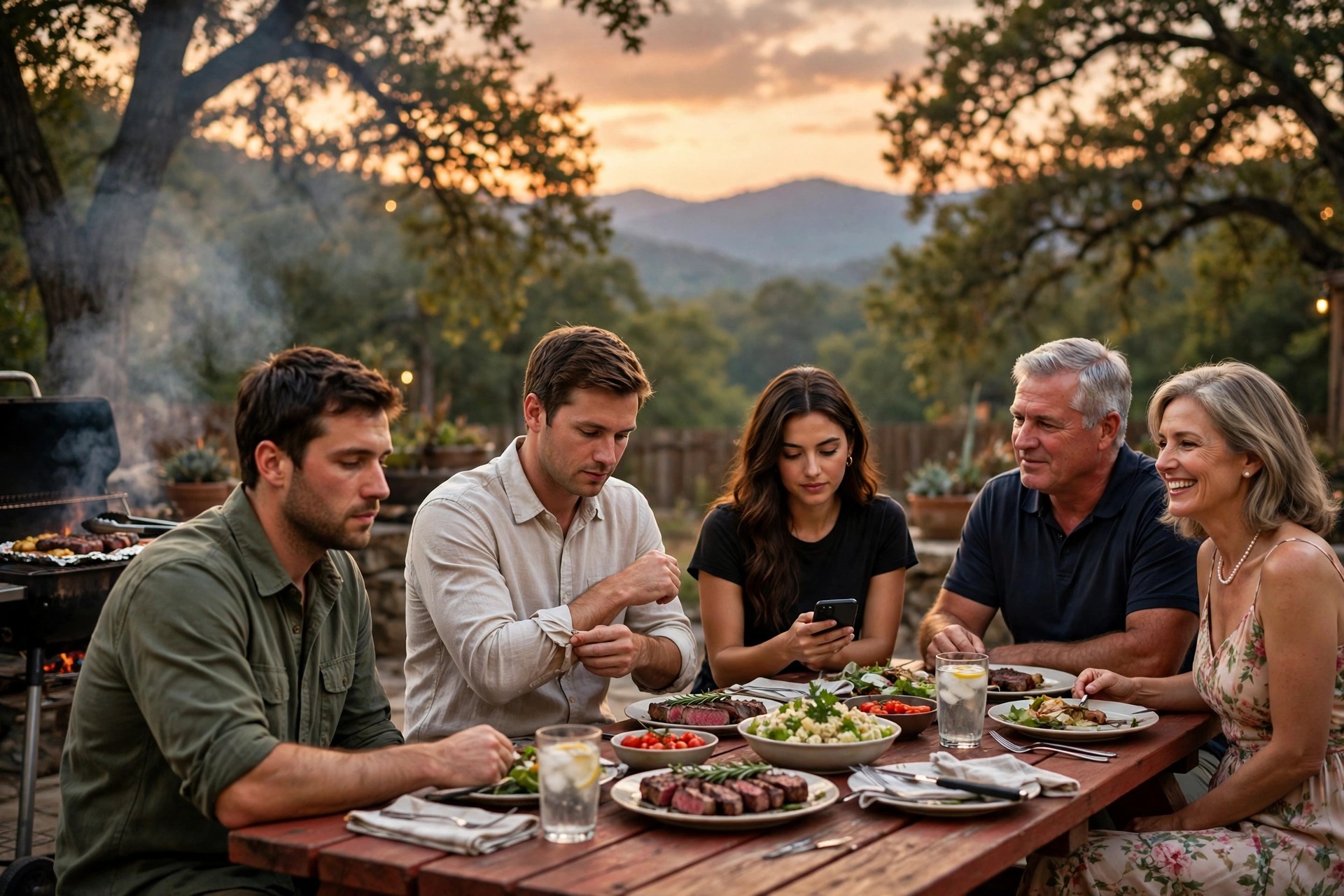
The patio behind Frank Callaway’s house in North Asheville smelled like charcoal smoke, cut grass, and Jolene’s sweet-mustard potato salad. It was a warm Sunday evening in late May, the kind where cicadas hummed in the oaks and the sky turned the color of bruised peaches over the Blue Ridge Mountains.
I was thirty-two years old, and my lower back ached from pulling a fourteen-hour double shift at Callaway’s Table. Mother’s Day weekend had bled straight into graduation weekend, and we had served nine hundred covers between Friday night and Sunday afternoon without a single comped meal. My forearms still bore faint pink lines from the sheet pans, and the faint scent of fryer oil and rosemary clung to my collar despite a quick shower before driving over.
Across the redwood picnic table, my twenty-eight-year-old brother, Colton, was adjusting the cuffs of a crisp linen button-down that had never seen a grease trap. Beside him, his girlfriend, Brinley, scrolled through her phone, her manicured nails tapping against the glass.
"Pass the rolls, Nathan," my father said from the head of the table.
Frank Callaway was sixty-one, broad-shouldered, with silver hair cropped short and hands scarred from thirty years of flat-top grills and cast-iron skillets. He had opened Callaway’s Table in downtown Asheville in 1996, wedged between a hardware store and a barbershop. Back then, it had twelve tables, red vinyl booths, and a chalkboard menu. People came for biscuits and gravy, Friday catfish, and meatloaf.
I handed him the basket. "Brisket came out good, Dad. You let it rest long enough."
"Always do," Frank said, though he didn't look at me. He glanced at Jolene, his wife of seven years. Jolene wore a floral sundress and a string of freshwater pearls, her smile bright and practiced. She had a way of leaning forward when she listened that made people feel important, right up until she decided they weren't.
I cut into my ribeye. It was medium-rare, just how I liked it, though I was too tired to be hungry. At fourteen, I had started bussing tables at Callaway’s Table after school. At sixteen, I handled kitchen prep. At eighteen, I managed weekend shifts while Dad was laid up with a torn rotator cuff. After earning my hospitality management degree at UNC Asheville, I came back full-time—not because I lacked options, but because I loved the hum of a well-run dining room and the pride of watching regulars walk out full and happy.
Over the past eight years, I had rebuilt the operation from the floorboards up. I replaced shaky produce brokers with local Buncombe County farms, modernized the cramped dining room without losing its warmth, built an online ordering system that kept takeout organized during Friday rushes, and launched a corporate and wedding catering arm that now brought in thirty-five percent of our annual revenue. Two years ago, when our landlord threatened a steep hike, I spent three months negotiating a ten-year extension that saved the business fourteen thousand dollars a year.
Callaway’s Table was doing $1.2 million a year. We had ninety-minute waits on Sunday mornings. I had trained a crew of twenty-two people who could handle three hundred brunch guests without panicking. Dad had told me, more times than I could count, that I was the backbone of the place. Vendors called my cell phone first. The bank manager knew my name.
Colton, meanwhile, had spent his twenties treating Dad’s checkbook like an angel-investor fund. There had been the streetwear brand in Charlotte that folded after four months, the duplex in Hendersonville that sat half-renovated until Dad paid a contractor to bail it out, the personal training studio that closed when Colton got tired of waking up at six, and the gourmet taco truck that lasted one summer before the generator blew and Colton abandoned it in a storage lot.
Six months ago, Colton had suddenly started showing up at the restaurant in pressed shirts, carrying a leather portfolio. Dad kept pulling him into the back office for closed-door talks. When I asked what was going on, Dad had clapped me on the shoulder and said, "He’s learning the business, Nate. Be supportive."
So I had been supportive. I opened the spreadsheets. I walked him through our prime-cost targets, our vendor rebate structures, and our seasonal staffing models. I thought, stupidly, that maybe twenty-eight was the age Colton finally grew up.
"Eat up, everyone," Jolene said cheerfully, smoothing her napkin over her lap. "Frank has some wonderful news to share before dessert."
I paused with my fork halfway to my mouth. Across the table, Colton stared down at his plate, pressing his lips together until they turned white. Brinley didn't even look up from her screen.
Dad cleared his throat and set his knife neatly across the edge of his plate. "I’ve been thinking a lot about the restaurant’s future," he began, his voice carrying the measured cadence he used when addressing the staff before a holiday rush. "I’m sixty-one. My knees aren't getting any younger, and Jolene and I want to spend more time down in Savannah. It’s time to formalize the next generation of leadership."
A quiet warmth started in my chest. For eight years, I had been running the place in every way except on paper. Every time I brought up an equity stake or a formal general manager contract, Dad waved a hand and said, Family doesn't need lawyers, Nate. You know where you stand. I figured tonight was finally the night he made it official.
"I’ve decided to hand full operational control of Callaway’s Table over to Colton," Dad said. "Effective tomorrow morning."
The cicadas in the yard seemed to grow deafeningly loud. My fork stopped in midair. Slowly, carefully, I lowered it back to my plate. The steak had gone cold.
"What?" I said. My voice didn't shake, which surprised me.
"Colton has fresh energy," Dad continued, rushing slightly now, avoiding my eyes. "New ideas. A vision for taking the brand to the next level. He deserves the chance to prove himself, and I want to see what he can do while I’m still around to advise him."
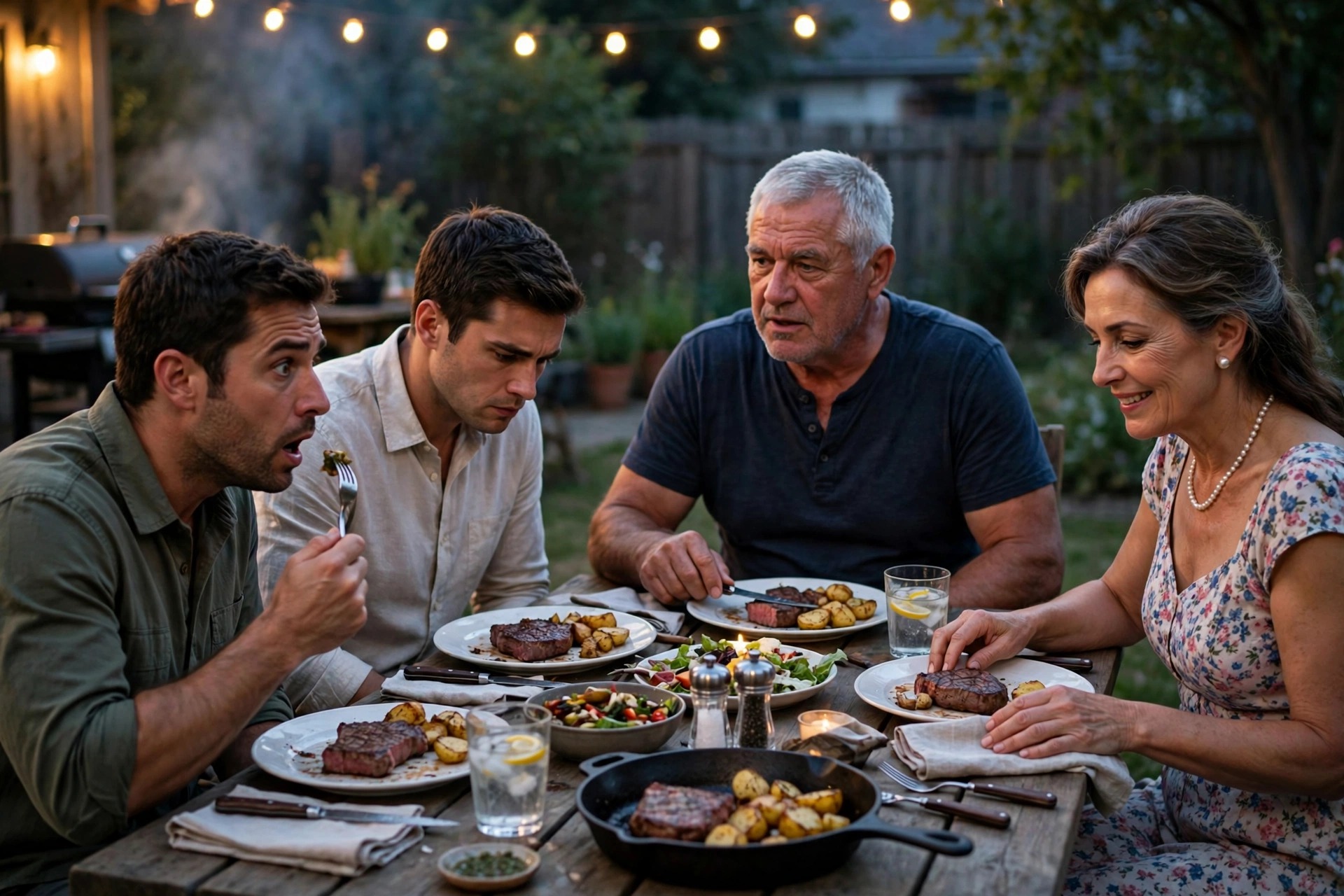
I looked at my brother. Colton’s jaw was tight, his gaze fixed on a smear of steak juice near his potatoes. He wouldn't meet my eyes. Not once.
"Dad," I said evenly, "I’ve been running operations for eight years. I built the catering division. I handle the books, the scheduling, the health inspections, the vendor contracts—"
"And you’ve done incredible work holding things together, Nathan," Dad interrupted, holding up a hand as if calming an overexcited employee. "Nobody is denying that. You’re dependable. You kept the ship steady. But it’s time for a new chapter, and Colton brings a modern perspective we need."
Holding things together. As though I had merely swept the floors and kept the lights on while everyone waited for the rightful heir to finish playing with his hobbies and claim his throne.
Before I could speak again, Jolene leaned across the redwood table and laid her cool, soft hand over the back of mine. She gave it a gentle, patronizing pat, the way you comfort a toddler who dropped his ice cream cone.
"You were just filling a seat, honey," she said, her voice dripping with practiced sympathy. "Colton needs this more than you do. You’re smart—you can get a job anywhere. Colton deserves his turn."
I stared at her hand on mine. Then I looked at my father.
I remembered every five-in-the-morning opening when the walk-in compressor died in July. I remembered missing my college roommate’s wedding because two line cooks came down with the flu. I remembered sitting at the cramped office desk at midnight every Tuesday, cross-checking Sysco invoices line by line so we didn't get overcharged on prime rib. I remembered Dad standing in the dining room two years ago, telling a table of rotary club members, Nathan’s my pride and joy. Best operator in Western North Carolina.
Now he sat with his hands folded beside his plate, waiting for me to be the dutiful, reliable son and swallow the insult without making a scene.
I slowly pulled my hand out from under Jolene’s.
"Okay," I said.
Jolene’s smile faltered slightly, as if she had braced for an argument and didn't know what to do with silence. Dad blinked. "Nate, listen, we can talk about a transition role—"
"No need," I said, pushing my bench back and standing up. "Thanks for dinner, Jolene. Steak was great, Dad."
I walked through the sliding glass door, through the quiet living room, and out to my Tacoma parked at the curb. My hands were completely steady on the steering wheel as I drove down Merrimon Avenue toward downtown Asheville.
Callaway’s Table was dark when I unlocked the front door at 8:15 PM. The streetlamps cast long amber rectangles across the newly refinished oak floors I had spent three weekends sanding and sealing myself. The dining room smelled faintly of lemon oil and baked bread.
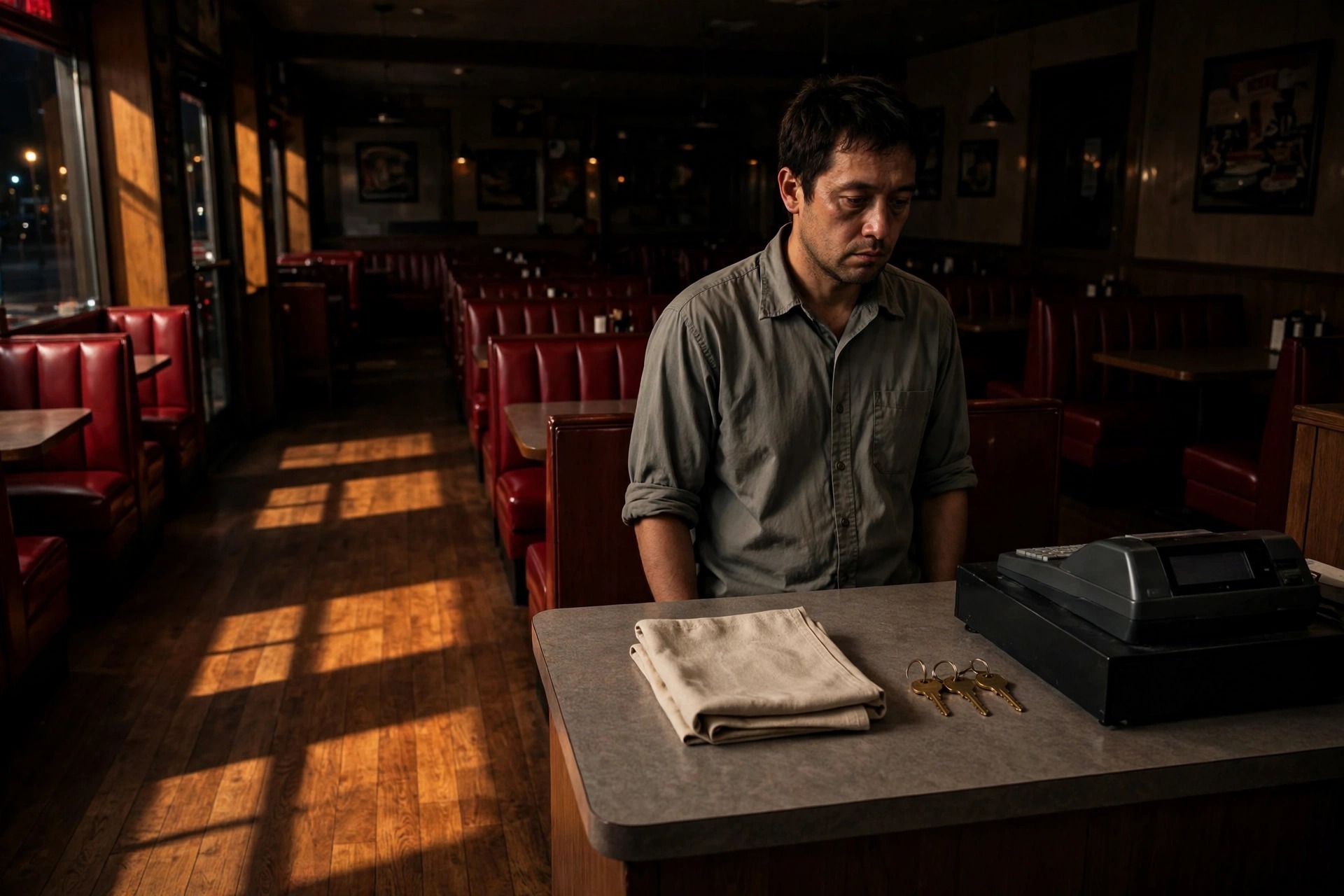
I walked behind the counter, untied my canvas apron—the one with my name stitched near the pocket—and folded it into a neat square. I set it beside the register.
Then I reached into my pocket, pulled out my keyring, and worked three brass keys off the steel loop: the front door, the back office, and the walk-in cooler. I lined them up in a tidy row beside the folded apron.
I stood there for ten seconds, listening to the low hum of the reach-in coolers in the kitchen. There was no speech to give. No glass to break. Just eighteen years of my life sitting on a laminate counter.
I turned around, pulled the front door shut until the deadbolt clicked, and walked out into the cool mountain air.
All chapters
- Chapter 1 - Cold Steak and Warm Smiles
- Chapter 2 - New Locks and Thin Margins
- Chapter 3 - Truffle Oil and Empty Booths
- Chapter 4 - Ninety-Five Degrees and a Clipboard
- Chapter 5 - The Signature on the Line
- Chapter 6 - The Vendor Knock
- Chapter 7 - The Investor Illusion
- Chapter 8 - Reading the Fine Print
- Chapter 9 - Unlocking the Doors
- Chapter 10 - A Seat at the Table
Original source: Chapter 1 - Cold Steak and Warm Smiles