
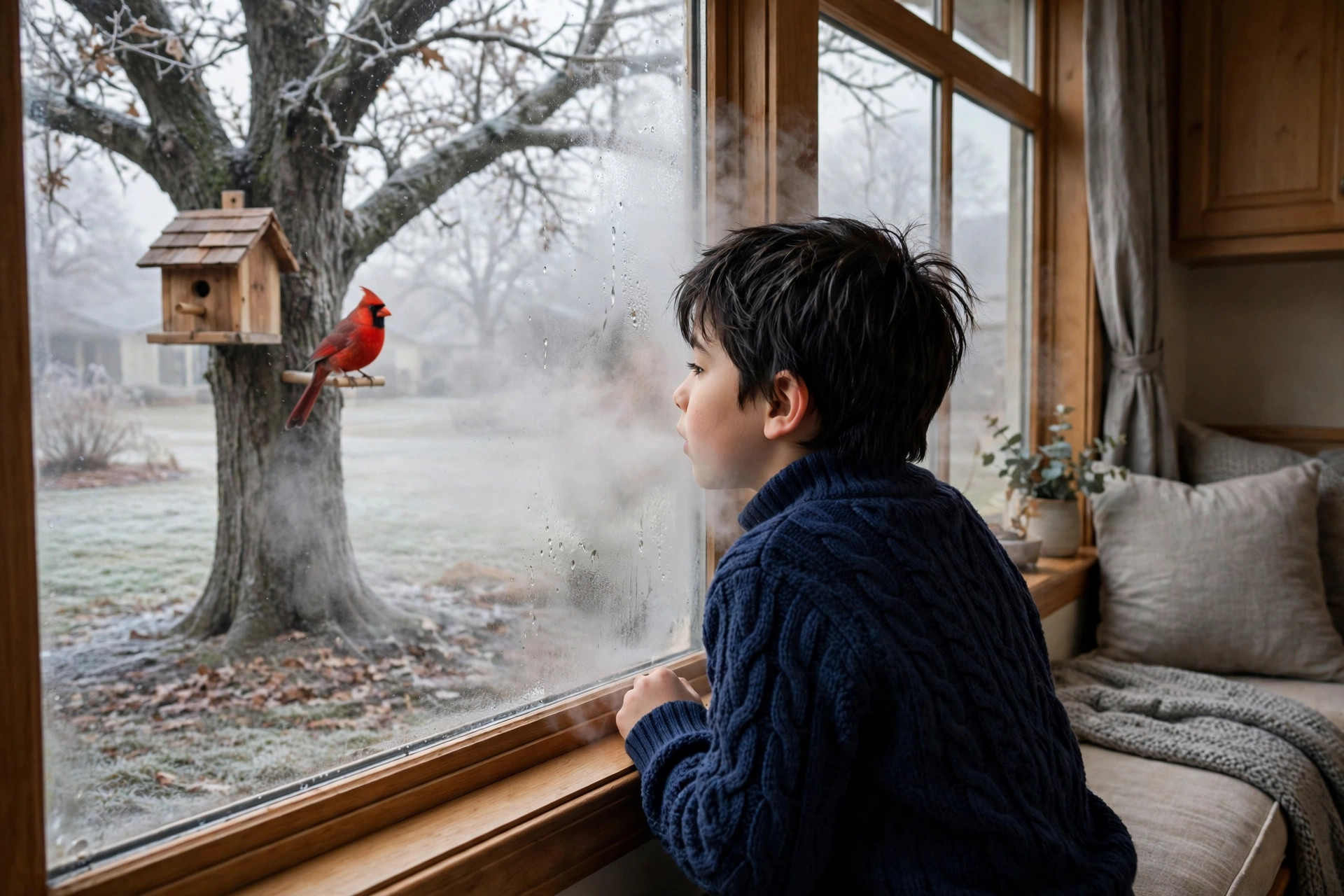
The cardinal arrived on the second Tuesday of December, when the frost on our lawn was thick enough to crunch beneath Theo’s winter boots.
He had mounted the cedar birdhouse on the stout white oak just twenty feet from our breakfast nook. Every morning since Thanksgiving, before he poured his cereal or zippered his backpack, Theo would stand at the glass with his breath fogging the pane, watching that small circular entrance. He had sanded away the grease stains from Judith’s trash can using four grades of paper until the wood gleamed like honey. He hadn’t spoken Judith’s name once since the drive home, but every time he smoothed down the roof with his thumb, I saw the ghost of her kitchen lingering behind his eyes.
"Mom," he whispered that Tuesday, not daring to move a muscle. "Look. Don't drop your spoon. Just look."
A male cardinal, crimson against the slate-gray morning, had landed on the dowel perch. It cocked its black-masked head, pecked curiously at the cedar lintel Theo had beveled with his own small hands, and hopped inside. Theo didn’t cheer. He simply exhaled a breath he seemed to have held for three weeks, his shoulders dropping two inches as if a court had finally cleared him of an unnamed crime.
Evan walked into the kitchen behind us, carrying his coffee mug. He stopped dead when he saw the flash of red through the frost. He set his cup down without a sound, placed his hands on Theo’s shoulders, and kissed the crown of our boy’s head. Neither of them said a word. They didn’t have to. The birdhouse wasn't junk; it had a purpose, even if the woman it was built for had treated it like refuse.
We thought that was the end of it. We thought our silence was our fortress.
For twenty-one days, Evan’s phone had remained blissfully quiet. His sister Denise hadn’t called, presumably still basking in the glow of Judith’s praise over the four-hundred-dollar designer scarf her daughters had bought with Judith’s own supplementary credit card. Judith hadn’t called either. In Judith’s universe, exile was a punishment she inflicted on others until they crawled back to her front porch with lowered heads and apologies for forcing her to be cruel.
Then, at 11:14 that evening, the landline on our kitchen counter rang.
Nobody called the landline anymore except telemarketers and the local pharmacy. Evan was already asleep, exhausted from twelve-hour shifts at his architectural salvage shop. I padded into the dark hallway, my bare feet cold against the hardwood, and lifted the receiver before it could wake Theo down the hall.
"Hello?"
Heavy, uneven breathing filled the line. For a second, I thought of hanging up, assuming it was a misdial. Then came a voice so thin, so stripped of its usual quiet endurance, that it took me three seconds to place it.
"Clara?"
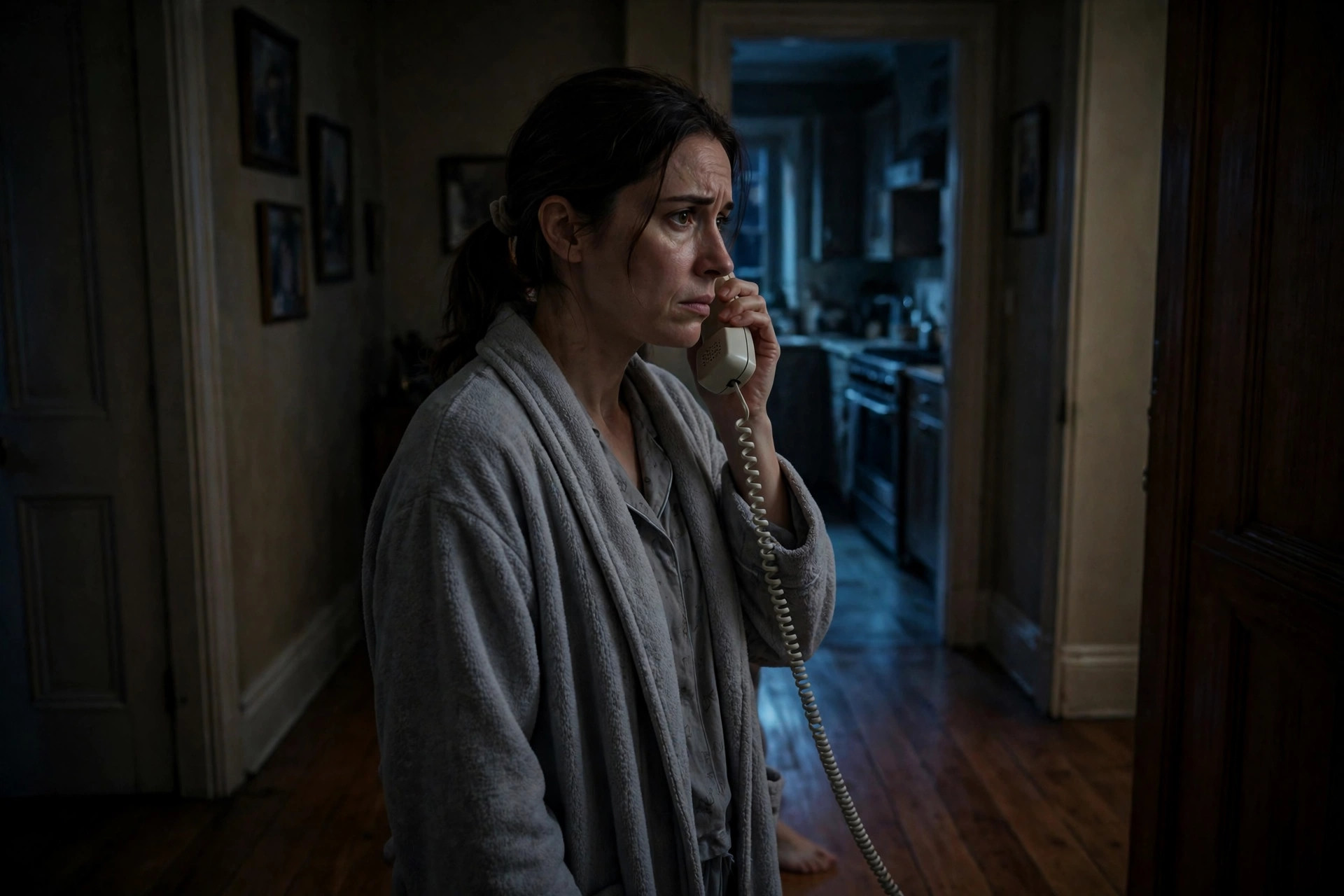
It was Walter. My father-in-law. A man who, in the twelve years I had been married to his son, had never spoken to me on the phone without Judith standing three inches from his elbow, directing the conversation.
"Walter? What’s wrong? Are you okay?"
"She’s in the ICU at St. Jude’s," Walter whispered. The background noise bled through the wire—the hollow paging of an emergency room doctor, the mechanical rhythmic hiss of an industrial ventilator, the squeak of rubber soles on linoleum. "It happened two hours ago. An aneurysm. Or a rupture. They’re still running scans on her head. The doctors... they said if we waited another twenty minutes, she wouldn't have made the ambulance ride."
My chest tightened, a strange and ugly tangle of adrenaline and residual anger twisting in my stomach. "Walter, I’m so sorry. Where’s Denise? Isn't Denise there with you?"
A sound came through the earpiece that chilled me to the marrow—Walter was crying. Walter, who had sat silently through forty-two years of his wife’s public humiliations, who had kept his eyes glued to his Thanksgiving napkin while his grandson’s heart was torn out, was sobbing so violently he had to pull the receiver away from his mouth.
"Denise isn't coming," Walter choked out, his voice cracking like dry timber. "I called her three times. Her husband answered on the third try. He told me... he told me they were advised by their attorney not to visit Judith until the forensic audit is complete."
I leaned against the kitchen doorframe, the cold wood pressing into my shoulder blade. "What are you talking about? What forensic audit?"
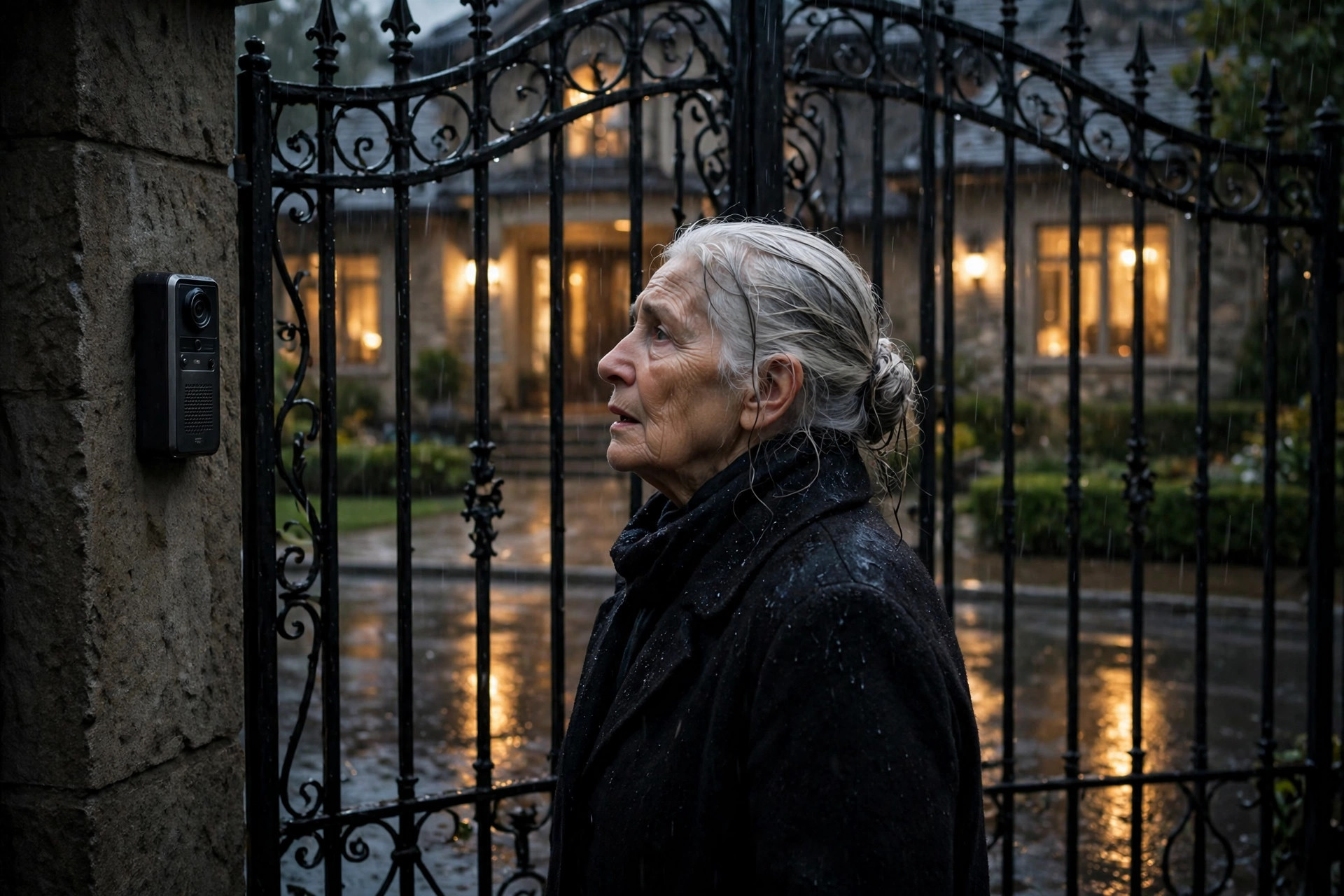
"Denise took it all, Clara," the old man wept. "The house deed. The municipal bonds. The money Judith set aside from her father’s estate. Judith signed the power of attorney papers the week before Thanksgiving because Denise promised to put her into that luxury gated community in Highland Park. This morning, the bank froze our joint grocery account because of a seventy-thousand-dollar line of credit Denise drew against it. Judith went to Denise’s house to confront her. Denise wouldn't even open the security gate. She spoke to her mother through the intercom... she told her she was an old woman whose usefulness was finished."
Walter gasped for air, his chest heaving through the receiver.
"Judith collapsed on Denise’s front walkway," he said. "The gardener found her an hour later in the rain. Denise’s husband told the paramedics to take her away because she was trespassing."
All chapters
- Chapter 1 - The Echo in the Cedar
- Chapter 2 - The Cold Corridor
- Chapter 3 - The Broken Pedestal
- Chapter 4 - The Cedar Shavings
- Chapter 5 - The Forensic Ledger
- Chapter 6 - The Gate at Willow Creek
- Chapter 7 - The Unbroken Grain
- Chapter 8 - The Blue Flashing Lights
- Chapter 9 - The Threshold of Pine
- Chapter 10 - The First Morning Sun
- Chapter 11 - The Thaw of Cold Silver
- Chapter 12 - The Unopened Envelope
- Chapter 13 - The Gate at the Ridge
- Chapter 14 - The Knock at Midnight
- Chapter 15 - The Deposition
- Chapter 16 - The Cedar Shaving
- Chapter 17 - The Return of Elm Street
- Chapter 18 - The First Blossom
- Chapter 19 - The Sentence
- Chapter 20 - The Blueprint in the Pine
Original source: Chapter 1 - The Echo in the Cedar