
The hinges of the oak cabinet did not scream; they groaned under the weight of fifteen years of undisturbed dust.
Inside, tucked beneath a folded, faded wool service coat with silver eagles pinned to the epaulets, rested a Pelican 1200 hard case. I did not need to enter the combination by sight. My thumbs found the notched dials by muscle memory alone: 0-7-2-4. The day Hannah was born.
When the latches popped with a muffled snap, the scent of gun oil, desiccated foam, and pressurized seal hit my nostrils. Inside lay my duty sidearm—a customized SIG Sauer P226 MK25, two spare eighteen-round magazines, a commercial-grade covert body audio-recorder no larger than a thumb drive, and a compact military trauma kit packed with QuikClot and chest seals.
I had spent thirty years commanding men in dust-choked provinces where rules of engagement were written in blood and renegotiated with artillery. I had retired because I promised my late wife, Martha, that our daughter would never spend another holiday wondering if her father was coming home in a flag-draped box.
*“Dad... he hurt me again.”*
Hannah’s voice echoed against the bare walls of my hallway like shrapnel ricocheting in an enclosed room. It wasn't the crying that tore my soul apart; it was the resignation. She had sounded like an exhausted hostage who had finally realized no negotiator was outside the door.
I grabbed the recorder, clipping it beneath the collar of my flannel shirt, and racked the slide of the P226 once. The brass casing of a 9mm hollow point flashed in the dim light before chambering with a crisp, mechanical slam. I thumbed the decocker, slid the weapon into an inside-the-waistband holster, and dropped the trauma kit into the deep pocket of my work coat.
Five minutes after the call disconnected, my 2018 Chevy Silverado was screaming down the gravel lane of my property, kicking up stones against the undercarriage as its heavy V8 roared onto the paved state highway toward Carmel.
Carmel, Indiana was forty-five minutes north of my farm under normal driving conditions. It was a sterile paradise of multi-million-dollar stone fortresses, manicured cul-de-sacs, and manicured lives designed specifically to keep the ugly realities of the world out. Zachary Albright did not merely live there; he practically owned the township. His cybersecurity firm, Albright Sentinel Systems, held municipal data contracts across the entire Midwest, including the very surveillance networks Carmel police used to monitor their immaculate streets.
I pushed the truck past eighty-five miles per hour, watching the needle climb while the speedometer glowed amber in the gathering dusk.
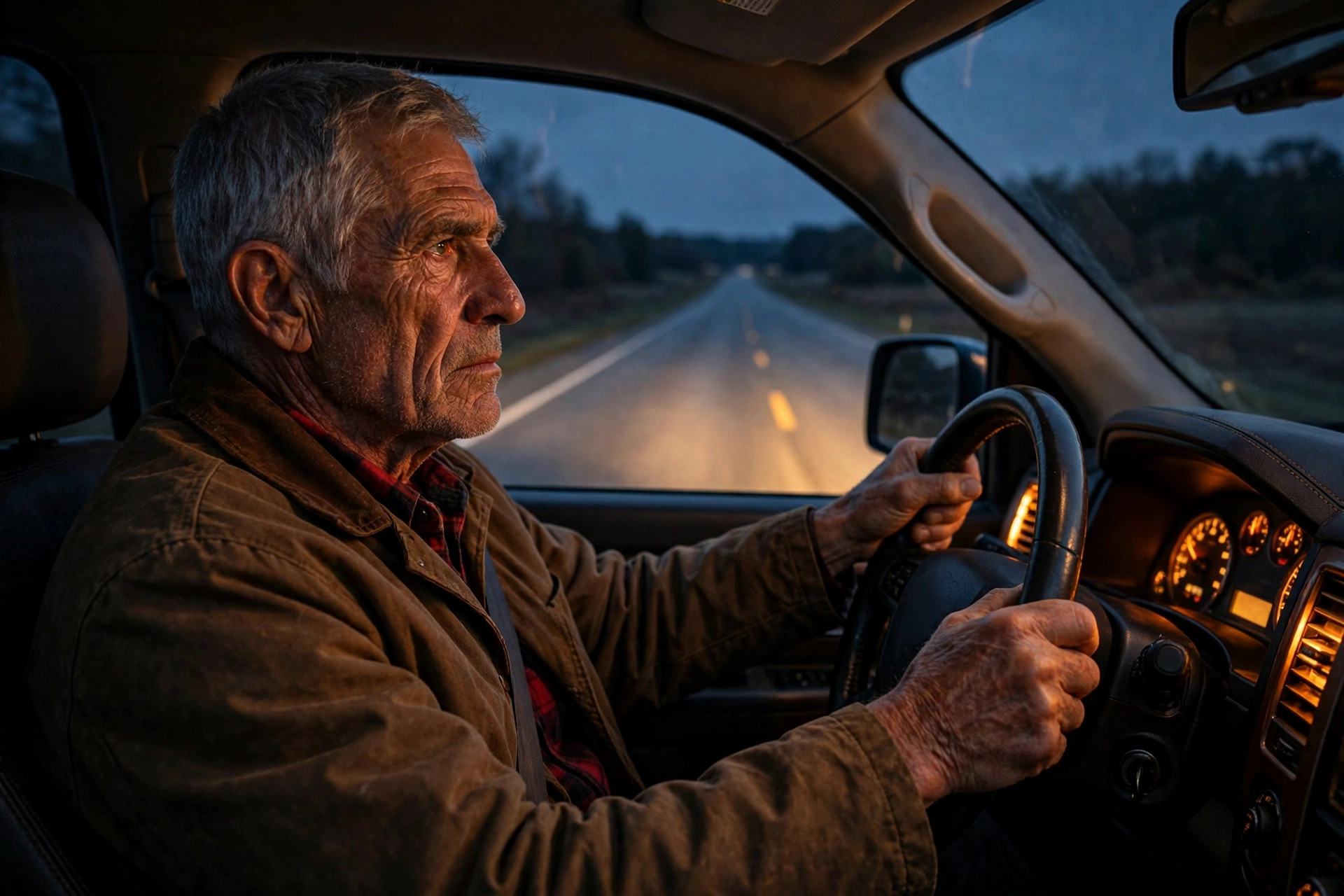
My mind didn’t dwell on rage. Rage is a sloppy commander; it wastes ammunition, clouds peripheral vision, and gets good people killed. Instead, I forced my brain into operational mode.
*Terrain:* Four-acre gated lot at the end of a private cul-de-sac. Wrought-iron perimeter fence, eight feet tall, monitored by high-definition optical and infrared cameras. Single vehicular gate with keypad entry and an intercom pillar.
*Target:* Zachary Albright. Thirty-four years old. Six-foot-one, runner’s build, former collegiate rower. Narcissistic personality structure. Cowardly when isolated, predatory when armed with institutional power and perceived leverage.
*Friendly asset:* Hannah Albright, née Montgomery. Twenty-eight years old. Five-foot-four. Severe physical danger. Last heard screaming during a blunt-force altercation.
The phone on my dashboard remained completely dark. No incoming calls. No text notifications.
At mile twenty, my hands gripped the steering wheel so tightly that the leather wrap groaned under the pressure. I remembered the day Zachary had asked for my permission to marry her. He had taken me to a rooftop steakhouse in downtown Indianapolis, wearing a bespoke Italian suit, flashing a smile that never reached his pale blue eyes. He had talked for two straight hours about stock options, venture capital rounds, and his philanthropic foundation.
He had not mentioned loving her once.
When I asked him what he admired most about my daughter, he had looked at me without blinking and said, *“She’s serene, Colonel. She brings order to my life.”*
I should have dragged him over that balcony railing right then and there. But Hannah had looked at him with stars in her eyes, dazzled by his charm, swept off her feet after years of watching her father live out of a canvas duffel bag. She wanted stability. She wanted someone who stayed.

And in return, Zachary Albright had built her a gilded cage and slowly, systematically broken her wings.
I took the ramp off Keystone Parkway with tires chirping against the concrete. Within four minutes, I was turning onto the winding, tree-lined avenue of River Ridge Estates. The houses here were set back behind expansive lawns, shielded by mature weeping willows and towering blue spruces.
Up ahead, the massive double wrought-iron gates of Zachary’s estate loomed out of the twilight. The gate was shut. A red LED glowed above the intercom box.
I didn’t slow down.
I tapped the high beams. If Zachary had an automated security team watching the feeds, they would see a three-quarter-ton truck barreling down the center of the driveway. I braked hard thirty feet out, stopping inches from the sensor loop embedded in the asphalt.
I climbed out of the cab, leaving the driver-side door swinging open and the engine rumbling like a low growl in the quiet suburban evening.
I walked straight to the pedestal, pressed the call button, and waited.
Static crackled through the small speaker. Then, a cool, patronizing voice came through. It wasn't Zachary. It was Arthur Vance, his personal head of residential security—a dishonorably discharged former private military contractor whose record I had quietly pulled three years ago through old contacts at Fort Bragg.
“Mr. Montgomery,” Vance’s voice purred with mock politeness. “Happy Easter. Mr. Albright is hosting a private family dinner tonight. He isn’t receiving guests.”
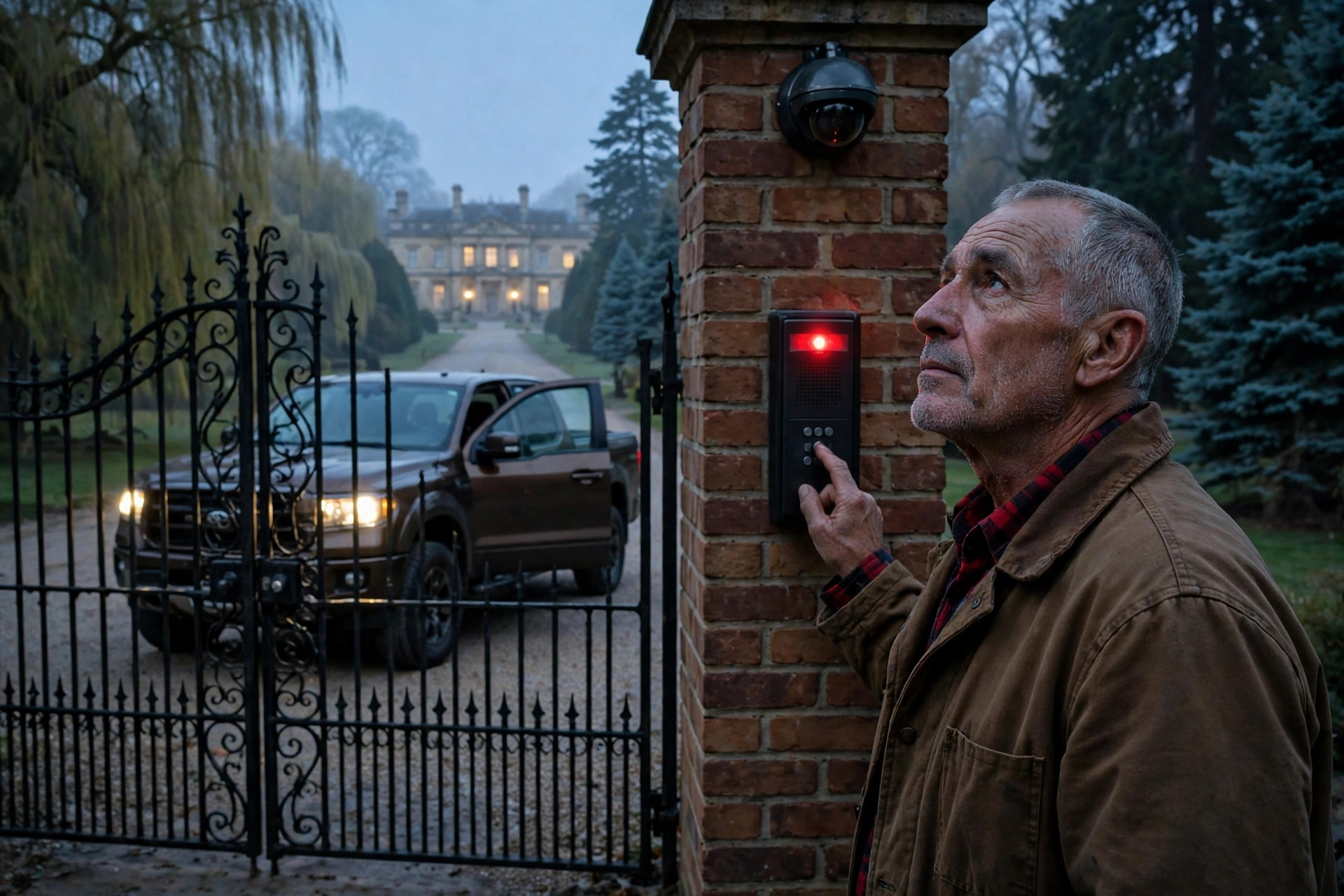
“Open the gate, Vance,” I said, keeping my voice utterly level, resting at a register that carried zero inflection.
“You know I can’t do that, sir. Zachary instructed me specifically: no interruptions. If you step back into your vehicle and leave, we won’t have to involve the Carmel Police Department.”
I looked up directly into the optical camera mounted on the brick pillar. I pulled back my coat slightly, making sure the lens caught the absolute stillness of my posture.
“You have ten seconds to punch the code, Vance,” I said quietly. “Or I will use the steel tow-hooks on this truck to pull this ornamental fence across your pristine front lawn. When the police arrive, they will find you interfering with the extraction of a battered woman. How do you think that defense holds up under federal inquiry?”
The line went silent for three long seconds.
Then came the mechanical clunk of a heavy magnetic latch releasing. The double gates began their slow, motorized swing inward.
I didn’t say thank you. I stepped back into the truck, shifted into drive, and surged up the half-mile winding driveway toward the limestone mansion that looked less like a home and more like a mausoleum.
***
All chapters
- Chapter 1 - The Relic in the Cedar Chest
- Chapter 2 - Through the Broken Threshold
- Chapter 3 - The Mask of Civilized Monsters
- Chapter 4 - Behind the Firewall
- Chapter 5 - The Lines Are Drawn
- Chapter 6 - Rain, Blood, and Cold Iron
- Chapter 7 - The Shadows of Brown County
- Chapter 8 - The Vault of Blackmail
- Chapter 9 - Siege in the Timberline
- Chapter 10 - The Hour of the Wolf
- Chapter 11 - The Convoy into the Storm
- Chapter 12 - The Citadel of Glass and Greed
- Chapter 13 - Severed Strings
- Chapter 14 - The 40th Floor
- Chapter 15 - The Reckoning at Midnight
- Chapter 16 - The Shadows of Geneva
- Chapter 17 - The Safehouse in the Timberline
- Chapter 18 - The Ambush at Blood River
- Chapter 19 - The Leviathan's Gates
- Chapter 20 - The Iron Horizon
Original source: Chapter 1 - The Relic in the Cedar Chest