
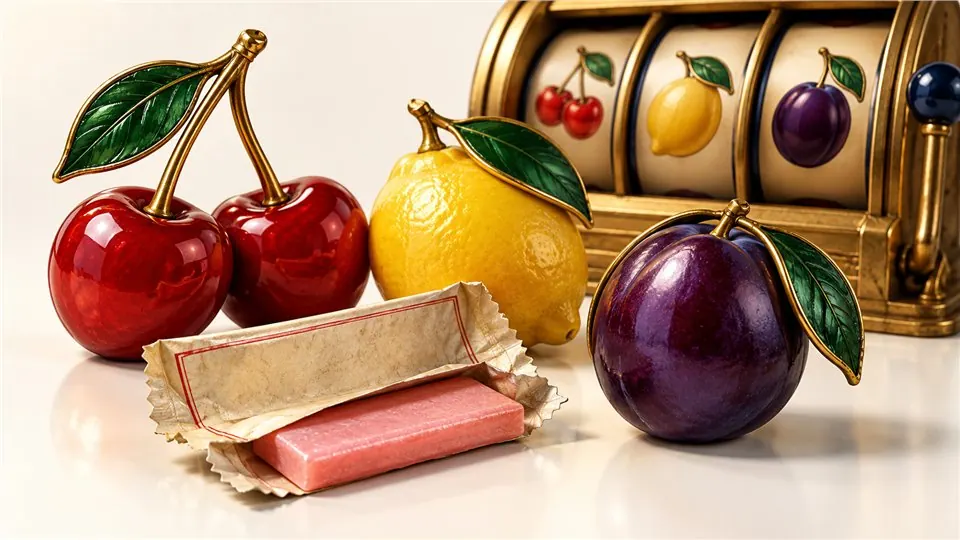
Cherries, lemons and plums are so familiar on slots that they can seem like arbitrary decoration. A historical explanation links their adoption to machines presented as gum-vending or trade-stimulating devices.
The story is more specific than “fruit meant easy wins”. It concerns how a machine was represented to customers and authorities, and how that imagery later became a recognizable slot convention.
A published account connects the imagery to gum
In his 2005 historical essay, Marshall Fey, Charles Fey's grandson, describes Mills adding a gum mechanism in 1910. Fruit imagery suggested the flavours of the gum associated with the machine.
This is an attributed historical account, not an assertion that every fruit-symbol cabinet was legally identical or exclusively awarded gum. The distinction between the vending presentation and the underlying gambling activity is central to the account.
BAR does not simply mean a gold bar
Fey's essay associates the BAR emblem with a gum-wrapper label. That origin differs from the modern assumption that a gold-coloured bar always represents bullion.
Later artists can reinterpret an emblem without changing the origin described in the historical source. A modern metallic BAR is therefore not evidence that early manufacturers intended the same material or theme.
Fruit symbols did not erase the bell tradition
The essay also links the bell emblem to Fey's earlier Liberty Bell format. Fruit, bells and BAR symbols can coexist as a mixed visual vocabulary rather than a single coherent vending theme.
That helps explain why a “classic fruit slot” can contain objects that are not fruit. The label refers to a recognizable style, not a rule requiring every symbol to come from a tree.
A historical disguise is not a modern legal exemption
Calling a device a vending machine does not establish how a jurisdiction legally classified it. The actual transaction, award and applicable law matter. Do not infer that offering a token or piece of gum automatically made a historical machine lawful.
The same caution applies to contemporary labels such as free, social or sweepstakes. A catchy category name is not a substitute for reviewing the product's actual rules in its market.
Modern symbols have rules, not inherited probabilities
A cherry can be a low-value pay symbol, a scatter or purely decorative artwork depending on the title. A bell can substitute in one slot and never substitute in another. The paytable determines the role.
Nor does an old-fashioned appearance imply low volatility or a particular RTP. A three-reel fruit display can conceal a model quite different from that of a surviving mechanical cabinet.
Use the history to ask better questions
When inspecting a fruit-themed demo, identify each symbol's rule, award unit and special behaviour. Separate the visual reference to old machines from the current implementation.
For the earlier cabinet, read the Liberty Bell history. For the current screen, read the paytable guide. Recognizing a symbol's heritage helps explain its appearance, not predict its next occurrence.
Sources and review notes
Source-checked 2026-10-07. Historical origin claims are attributed to Marshall Fey’s published account. This is not legal advice about historical vending devices or contemporary gambling categories.
Continue reading
The Liberty Bell Slot: What Was New—and Why Its Date Is Disputed
Explore the Liberty Bell’s automatic three-reel design, distinguish earlier gambling devices and compare the dates used by museum and landmark records.

How to Read a Slot Paytable: Symbols, Stakes and Bonuses
Understand slot paytables with worked examples of line wins, total-stake multipliers and ways. Check Wild exceptions, bonus triggers and payout limits.

Weighted Reels: Why Visible Symbols Do Not Reveal Slot Odds
See how symbol weighting works with a simple example, why equal-looking symbols can have unequal chances and what a demo cannot disclose.