
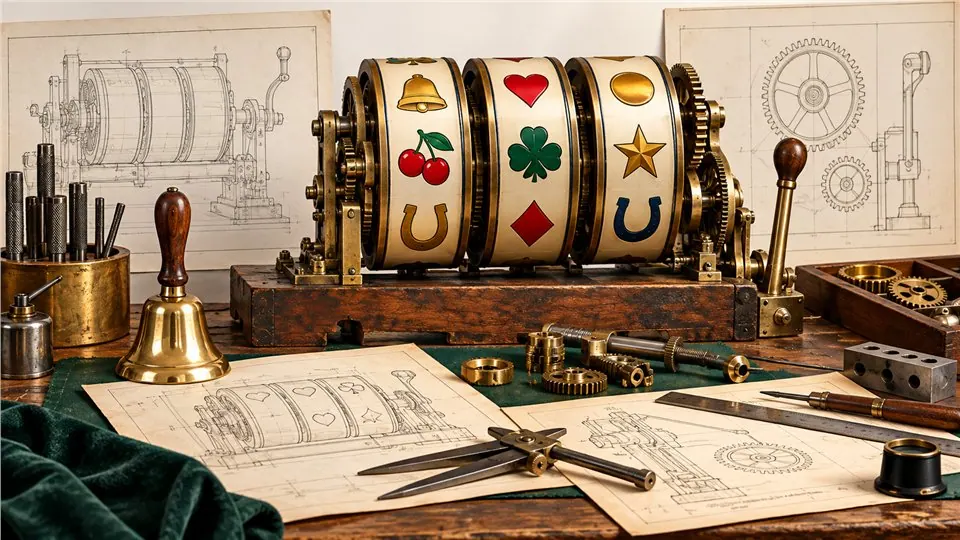
Charles Fey is usually introduced through a single cabinet: the Liberty Bell. That shorthand makes a diverse period of mechanical experimentation look like one isolated invention.
The surviving records instead point to a workshop culture of machinists, trade stimulators and varied gambling devices. Following the workshop and the objects gives a more useful history than imagining a modern slot studio transplanted into the nineteenth century.
The Market Street workshop has an official record
California's landmark entry identifies a workshop at 406 Market Street operating from 1897 to 1906. It records the workshop's destruction in the earthquake and fire of 1906.
An address and an operating period are different kinds of evidence from a loosely repeated invention year. They anchor the story to a place without proving the date of every prototype made there.
Theodore Holtz belongs in the account
SFO Museum's catalogue describes Holtz and Fey as business partners whose professional collaboration ended in 1896. It documents a Holtz trade stimulator and Fey's related Three-Spindle format.
This complicates the lone-inventor narrative. A named inventor can be important while still working within a network of partners, machinists and competing designs.
Klondike shows a different approach to a prize display
The museum also records Fey's Klondike, dated 1897, as a multiple-coin wheel device. Its display and selection arrangement are not simply a Liberty Bell with another theme.
The distinction matters when classifying early objects. A wheel-based award device, a card display and a three-reel cabinet should not be treated as identical evidence merely because they accept coins.
Building a machine and operating it are separate activities
A history of invention concerns mechanisms and design. A history of distribution concerns where the machines were placed, who serviced them and how awards were fulfilled. A single maker can participate in both, but a source must support each claim separately.
Avoid deriving a personal fortune from a machine's popularity. Workshop output, business revenue and the inventor's lifetime wealth are different questions. None is established by a photograph of an attractive cabinet.
Why contemporary records and surviving objects matter
A directory can establish that a business used an address. A catalogue can identify an object. A later recollection can supply a narrative. Those records complement one another but do not have identical evidential weight.
Where accounts disagree, preserve the disagreement and define the event being dated. Do not turn the oldest year found on a search result into an unquestioned birth date for an entire industry.
The modern lesson is about evidence, not nostalgia
Today's studio names, release dates and provider biographies also need specific records. A renamed company or inherited catalogue can make a simple founding-date story misleading.
Read the Liberty Bell date discussion for one example. A careful history explains what the record supports while leaving unsupported biographical details and dramatic wealth claims out.
Sources and review notes
Source-checked 2026-10-07. Regulatory references apply within their stated jurisdictions, not to every demo or country. Practical examples are explanatory, not provider certification or predictions of future results.
Continue reading
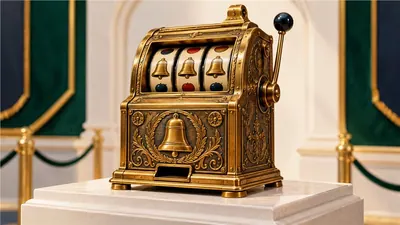
The Liberty Bell Slot: What Was New—and Why Its Date Is Disputed
Explore the Liberty Bell’s automatic three-reel design, distinguish earlier gambling devices and compare the dates used by museum and landmark records.

A Source-Led Slot Timeline: Cabinets, Networks, Touch and Browser Delivery
Follow documented slot milestones with a clear event type and source, including Liberty Bell date differences, virtual mapping, jackpots and mobile launches.
Official Slot Rules as Evidence: Match the Source to the Claim
Distinguish product rules, provider announcements, regulator standards and research papers, then record the version and limits instead of treating an official logo as universal proof.