

A timeline is useful only when its dates refer to defined events. An invention claim, a patent publication and a product launch are not interchangeable.
These selected milestones describe changes in hardware, systems and interfaces. They are not an exhaustive history or evidence that newer products offer better odds.
1895 / 1898: the Liberty Bell record needs a qualification
California's landmark record uses 1895 for Fey's three-reel bell invention; SFO Museum dates its Liberty Bell account to 1898. Preserve that difference instead of forcing one unqualified year.
The milestone concerns a particular automatic three-reel format, not the beginning of all coin-operated gambling devices.
1984: publication of Telnaes’s electronic-mapping patent
US4448419A was published on 15 May 1984. It describes electronic selections mapped to physical reel positions.
A patent publication is a documented technical event; it is not automatically the date every commercial implementation appeared.
1986: Nevada Megabucks becomes a network milestone
An archived IGT release dates the Nevada system's introduction to March 1986.
The innovation concerns a linked prize arrangement. Pool size and an individual trigger probability remain different quantities.
2011–2012: NetEnt documents a mobile-specific rollout
A 2012 provider release dates Net Entertainment's first mobile-specific portfolio to late 2011.
Its claim is provider-specific. The historical significance is a change in touch-interface delivery, not a universal start date for all mobile slots.
2016: Bonanza’s launch records a design combination
Big Time Gaming's announcement identifies a 7 December Bonanza launch in its 2016 narrative, combining Megaways and reactive reels.
Keep the product launch separate from broader claims about the first use of every underlying idea.
2020–2021: Flash support ends and the player blocks content
Adobe records support ending on 31 December 2020 and player blocking from 12 January 2021.
This delivery milestone helps explain dead legacy links. It does not establish that every old title received a modern browser conversion.
Read the sequence as evidence, not a single progress score
These events answer different questions. A cabinet record concerns an artifact or invention attribution; a patent concerns a documented technical proposal; a network introduction concerns prize organization; a browser deadline concerns software delivery. Placing them in chronological order does not make them equivalent.
For deeper research, follow the linked subject article and retain the event type with the date. Do not infer that a later interface has better RTP, that a larger network makes a jackpot more likely, or that a patent proves the earliest commercial use of an idea. A historical timeline should expose those distinctions rather than hide them behind a confident year.
Sources and review notes
Source-checked 2026-10-07. Regulatory references apply within their stated jurisdictions, not to every demo or country. Practical examples are explanatory, not provider certification or predictions of future results.
Continue reading
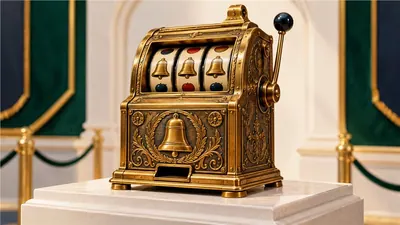
The Liberty Bell Slot: What Was New—and Why Its Date Is Disputed
Explore the Liberty Bell’s automatic three-reel design, distinguish earlier gambling devices and compare the dates used by museum and landmark records.

Virtual Reels Explained: The Selection Behind the Reel Window
Understand virtual reel mapping, its documented history and why the number of visible stops does not necessarily determine a slot’s probabilities.

Progressive Jackpot History: From a Local Prize to a Networked Pool
Trace the significance of IGT’s 1986 Megabucks system, distinguish local and wide-area networks and understand why historic award terms matter.

The Rise of Mobile Slot Demos: Touch Controls Changed the Test
Use NetEnt’s documented 2011–2012 mobile rollout to understand touch interfaces, portrait layouts, browser constraints and the limits of desktop-only testing.